Many clients often feel uncertain when choosing materials for plastic bottles—some want the best and most expensive option, while others tend to save costs. We’ll talk about the differences of materials to help you make a more suitable choice.
Plastic bottles on the market mainly divided into two categories:
PE bottles and PET bottles.
PE Bottles
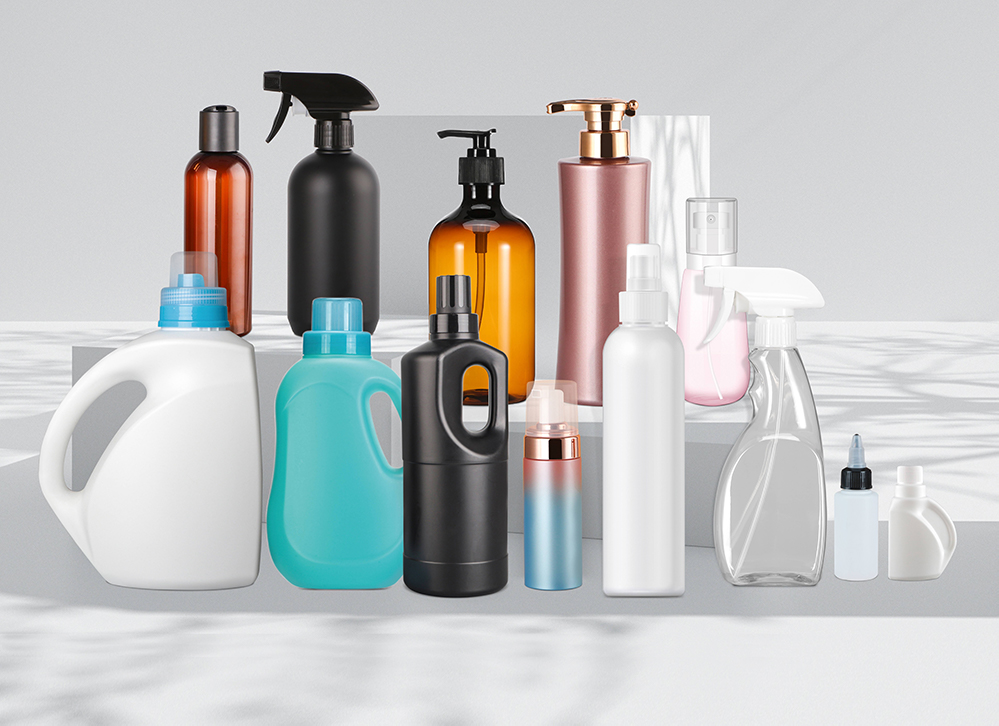
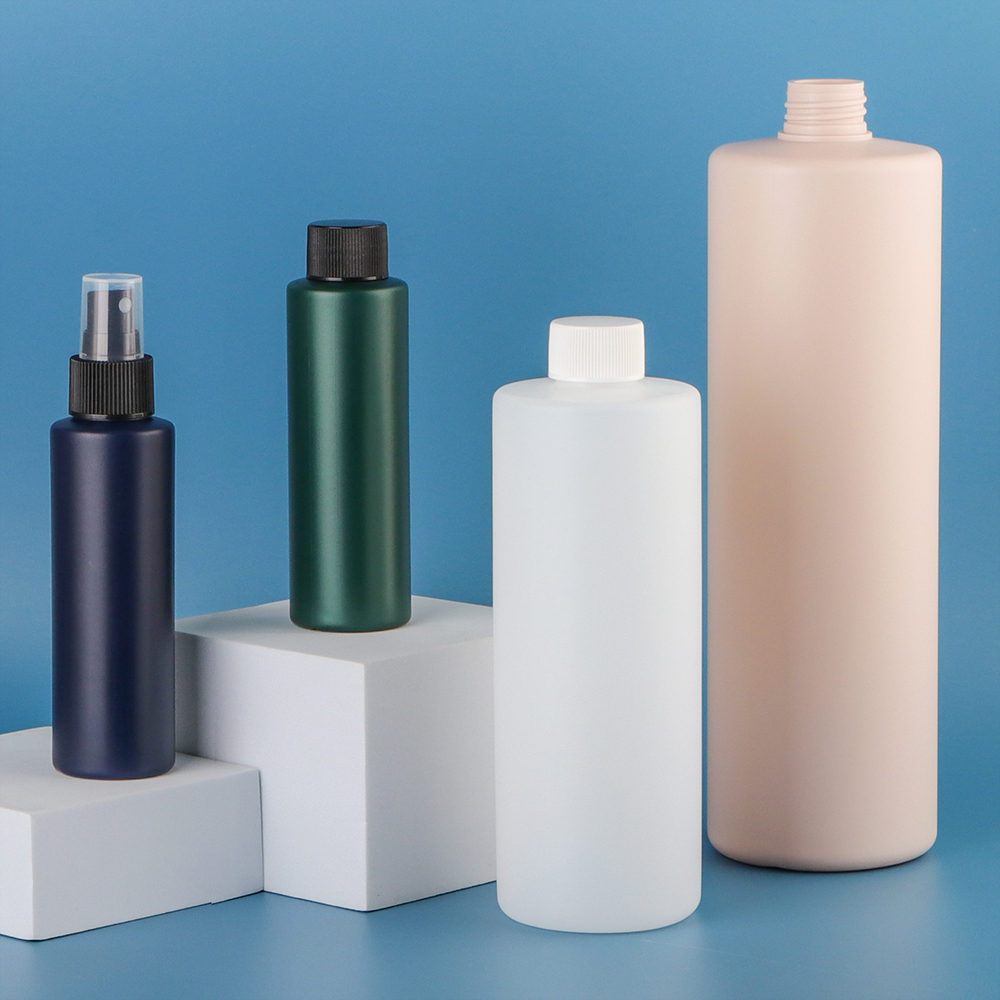
Process & Appearance: Produced via one-step blow molding, resulting in a matte finish. Commonly seen in daily chemical packaging (e.g., laundry detergent bottles).
Strengths: High plasticity allows for irregular, custom shapes; good temperature and chemical resistance (acids & alkalis); cost-effective and versatile.
Limitations: Not fully transparent or colorless; may have parting lines, flash, or black spots. Quality depends heavily on the manufacturer’s craftsmanship.
PET Bottles
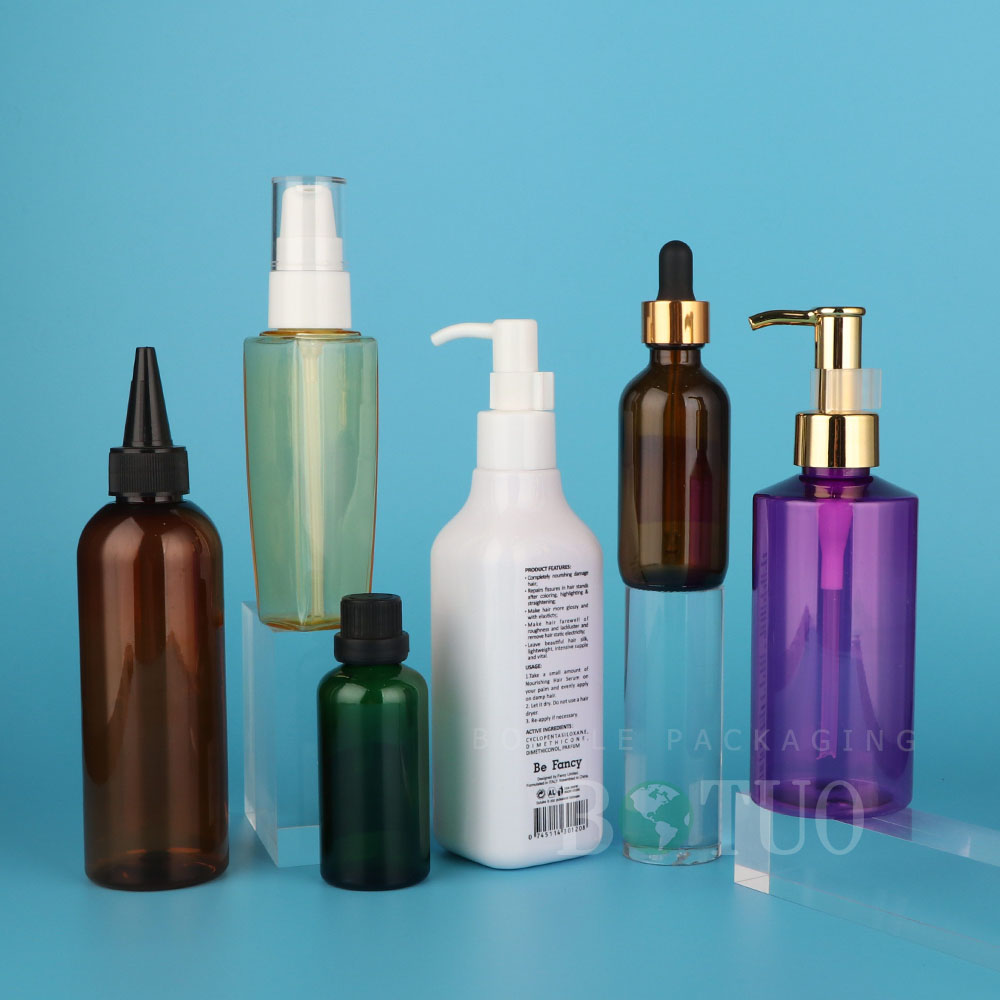
Process & Appearance: High-gloss surface, available in transparent, translucent, or solid colors (e.g., mineral water bottles).
Limitations: Complex shapes (e.g., flat or oval) can cause uneven surfaces affecting labeling; poor heat resistance (deforms around 70°C); limited chemical resistance—risk of cracking with acidic or alkaline liquids.
The most expensive material isn’t always the best fit for your product. Consider your product’s usage scenario and quality positioning. The right choice is the one that aligns with your needs.
Need help deciding? Contact us, and we’ll provide professional material recommendations tailored to your product requirements.